Small errors in freight calculations become expensive surprises when the invoice arrives. These are the mistakes we see most often — and how to avoid them.
1. Measuring the product, not the carton
Freight is charged on the outer carton (or pallet), including padding, handles and overhang. Always use the dimensions from the packing list or measure the packed carton.
2. Mixing units
Centimetres, inches and metres in the same calculation give results that are off by orders of magnitude. Choose one unit — centimetres is standard — and convert everything first.
3. Ignoring volumetric weight in air freight
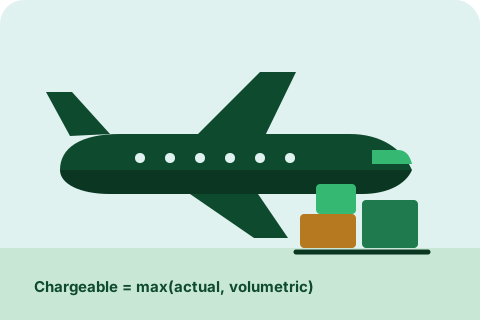
Light, bulky cargo is charged on volumetric weight, not on the scale weight. Calculating from actual weight alone can underestimate air freight by 30–50%. See Actual vs volumetric weight.
4. Using the wrong divisor
Express couriers often use 5000, airlines 6000. On the same carton, 5000 gives a 20% higher volumetric weight. Confirm the divisor with your carrier.
5. Forgetting the W/M rule in sea freight
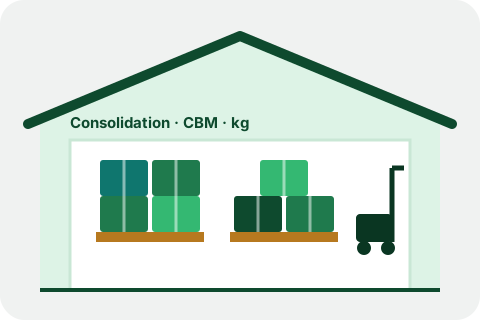
For dense goods, sea freight may be charged per tonne instead of per CBM. Compare 1 CBM with 1,000 kg and use the higher figure.
6. Comparing only the base rate
A low ocean rate can hide high origin, destination or documentation fees. Compare total quotes on the same Incoterm.
7. Ignoring minimum charges
LCL shipments often have a 1 CBM minimum; air shipments a minimum charge per shipment. Very small shipments cost more per unit than you expect.
8. Currency mistakes
Quotes may be in USD while your supplier invoices in CNY and you sell in local currency. Note the currency of each cost and the exchange rate you used.
9. Assuming 100% container fill
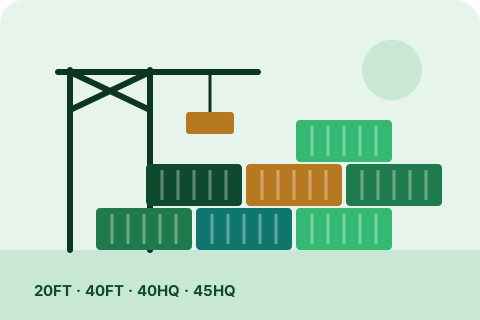
A 40HQ's nominal 76 CBM is not what you can actually load. Plan for roughly 85–90% for neat cartons, less for pallets. See How many CBM fit in a container?
10. Not keeping a record
Without saved calculations, you can't compare the estimate with the final invoice — or learn from the difference.
Avoid them with MYCBM
MYCBM works in centimetres and kilograms, shows volumetric and chargeable weight side by side with a selectable divisor, supports 18 currencies, estimates container fill and keeps a history of your calculations. Results are estimates — always confirm final rates with your carrier or forwarder.
Try the calculator from this guide
Calculate CBM, freight costs and container fill in seconds with MYCBM.