A CBM calculator is not just for freight forwarders. For importers it is a daily decision tool: it tells you what an order will cost to ship before you pay the supplier.
What a good CBM calculator should do
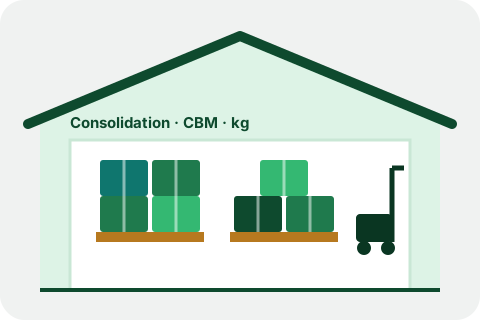
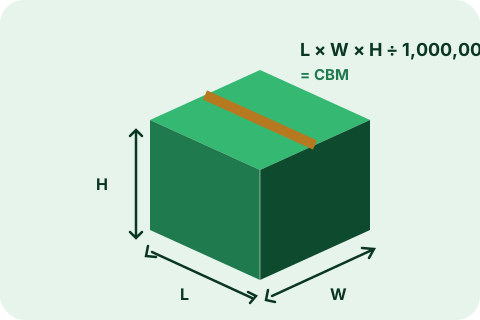
- Calculate CBM from carton dimensions and the number of cartons.
- Work with quantity of pieces as well as cartons.
- Apply your rate per CBM in your currency.
- Show the total shipping cost, not just the volume.
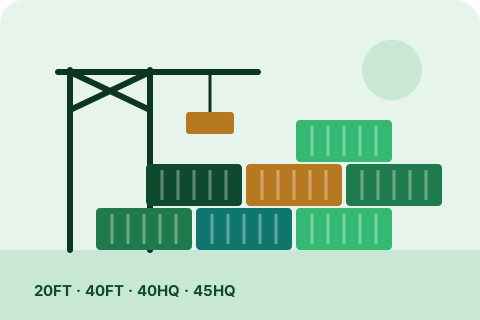
- Estimate how full a 20FT, 40FT or 40HQ container will be.
- Save calculations so you can compare suppliers later.
Five ways importers use it
1. Check the supplier's packing list
Recalculate the CBM from the carton dimensions on the packing list. If the supplier's total doesn't match, ask before the goods ship.
2. Compare quotes on the same basis
Forwarders may quote per CBM, per container or all-in. Converting everything to cost per CBM — and cost per unit — makes quotes comparable.
3. Decide LCL or FCL
When the total approaches 13–15 CBM, compare an LCL quote with a 20FT container. See How to calculate sea freight cost using CBM.
4. Negotiate packaging
Smaller or better-fitting cartons can cut volume by 10–20%. A calculator shows the saving immediately.
5. Price your products
Freight per unit feeds directly into your landed cost and selling price. See How to calculate shipping cost from China.
Importer checklist
- Use outer carton dimensions, in centimetres.
- Confirm the number of cartons, not just units.
- Ask whether the rate is W/M and what the minimum charge is.
- Add origin, destination and customs costs to the ocean rate.
- Keep your calculations so you can compare the actual invoice later.
Try MYCBM
MYCBM's Sea Freight Calculator does all of the above in Arabic, English or French, in 18 currencies, and keeps a searchable history of your calculations.
Try the calculator from this guide
Calculate CBM, freight costs and container fill in seconds with MYCBM.